AirScope: Pollen & Air Quality
- 4.0
- Rating
- 10.00K
- Installs
- Free
- Price

 Analysis by App-foxy
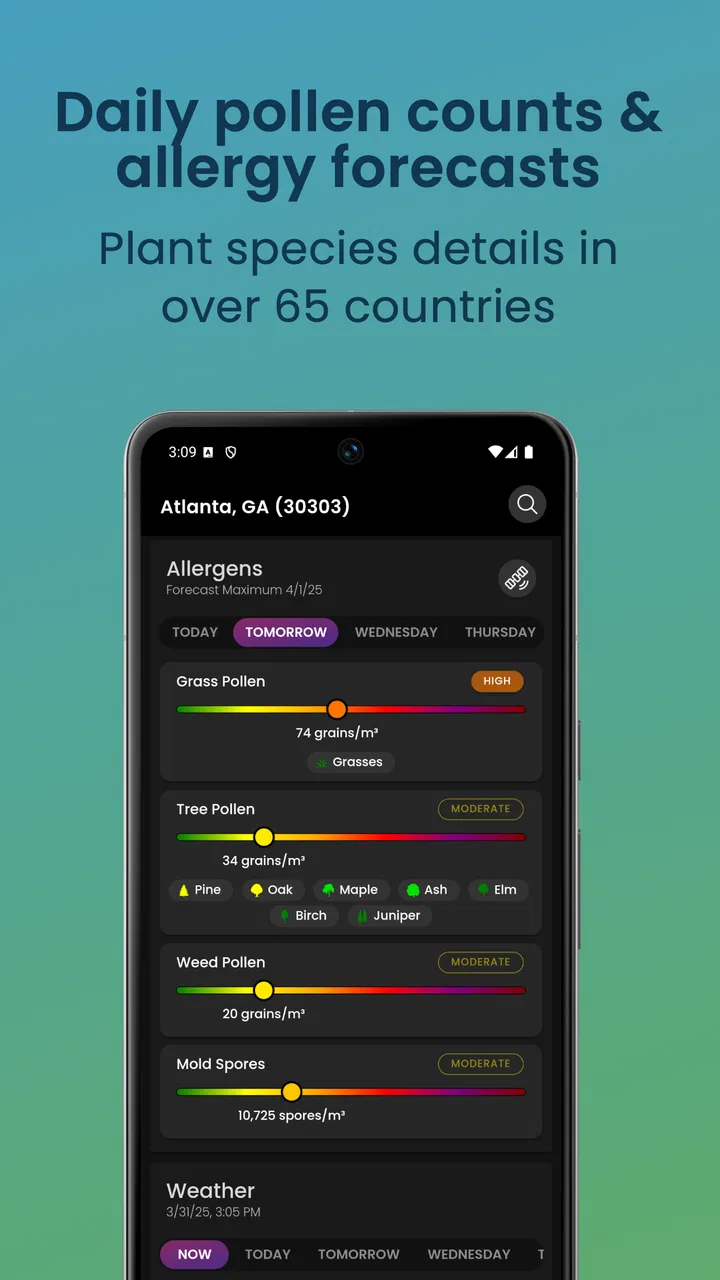
I tend to judge weather apps by what they help me decide, not by how many screens they offer. AirScope: Pollen & Air Quality makes a convincing case for people whose day depends on the air outside. Rather than treating weather as only temperature and rain, it puts pollen, air quality, allergy warnings, wildfire smoke, and radar into the same practical picture. That focus makes it more useful than a standard forecast when a bright, pleasant-looking day can still trigger sneezing, coughing, or breathing discomfort.
After spending time with this free weather app, my main impression is clear: it works best as a decision tool for outdoor plans, not as a complete replacement for every conventional weather service. I would open it before a run, a walk with a dog, a commute, or a weekend activity where air conditions matter as much as the forecast. The app is made by Ingenio Productions, is suitable for Everyone, and runs on devices using operating system version 12 or later.
Why AirScope feels different from an ordinary weather app
The strongest part of the experience is the way it connects information that people often check separately. A typical weather app may tell me that the temperature is comfortable and the wind is light. AirScope encourages a second question: will the air itself be comfortable for me? Its pollen count and air-quality forecast, allergy alerts, wildfire smoke map, and weather radar create a more health-aware view of the day.
You May Also Like

 Blood Strike: 2.5 Anniversary
Blood Strike’s Loadouts Turn Every Drop Into a Tactical Gamble
A close look at Blood Strike’s custom loadouts: how fast access to signature weapons reshapes its battle royale rhythm, rewards preparation, and narrows the gap between fights.

 Pandora - Music & Podcasts
Pandora’s Music Is Easy to Start, but Harder to Recover
Pandora’s strength is its low-effort path from a seed to a station. Its weak spot is how much confidence it asks you to place in connection, setup, and quiet recovery.

 8 Ball Pool
 Is Built on Rivalries, Rematches, and Routine
A close look at the rivalries, rematches, shared routines, and unanswered safety questions that turn a quick pool match into a persistent mobile community.

 Samsung Music
’s Quiet Strength Is Playing What You Already Own
Its reach comes less from spectacle than from dependable access to a personal library. That simplicity is both the app’s strongest retention engine and its ceiling.

 AccuWeather: Weather Radar
AccuWeather Review: A Quick, Clear Forecast for Everyday Decisions
For everyday plans, the best forecast is the one you can understand quickly. AccuWeather makes rain timing, radar, and local conditions easy to act on, with a few trade-offs.

 Hill Climb Racing
Why Hill Climb Racing Still Turns Crashes Into One More Run
A tiny car, a bumpy hill and one more upgrade: Hill Climb Racing keeps resurfacing because its simple chaos makes every near-miss feel personal.
More From Our News Desk
View All News


That combination is especially valuable during allergy season. A pollen number by itself can be hard to interpret, while an alert gives the information more practical meaning. I can use the forecast to decide whether to move exercise indoors, keep windows closed during a particular period, or take a shorter route through an area where I usually notice symptoms. The app does not make that decision for me, but it puts the relevant warning closer to the forecast I am already checking.
The wildfire smoke map adds another useful layer. Smoke can affect locations far from an active fire, and a normal-looking local forecast does not always communicate that risk clearly. Having smoke information alongside air-quality details makes the app more relevant for travel and outdoor planning. If I were visiting another town, I would rather check both the local weather and the air conditions before planning a long hike or an outdoor event.
The radar is also important because air quality is not the only reason plans change. A route may look fine from an allergy perspective but become impractical when rain moves in. The radar helps place the health-related information in a wider context. That makes AirScope feel less like a single-purpose pollen tracker and more like a weather companion built around the question of whether going outside is sensible right now.
A useful routine for mornings and outdoor plans
My preferred way to use the app would be a quick morning check rather than constant monitoring. I would look at the pollen and air-quality outlook first, scan for an allergy alert, and then use the radar to see whether the next few hours are likely to stay workable. This order matters because it prevents the familiar mistake of seeing pleasant temperatures and assuming that an outdoor plan will feel pleasant too.
For someone who cycles to work, the app can support a simple alternative-plan routine. If the air looks uncomfortable, that person can choose public transport or an indoor workout before leaving home. If the air is acceptable but rain is approaching, the radar may suggest departing earlier. The value is not a single forecast number; it is the ability to compare several reasons for changing plans without jumping between unrelated apps.
Parents may also find this approach practical. A child’s outdoor playtime can be affected by pollen, smoke, and storms in different ways. AirScope gives a parent a faster way to consider those conditions together. I would still treat any health warning seriously and use professional medical advice for personal decisions, but for everyday planning the app provides useful context that a basic temperature forecast often misses.
What the rating and app maturity suggest
AirScope has an average rating of 4.0 from around 281 ratings, with roughly 87 written reviews. I read that as a positive but not overwhelming signal. There is enough user response to show that the concept is landing with some people, yet the app is not presented as a universally established weather standard. That matches my experience: its appeal depends heavily on whether pollen, smoke, or air quality is part of the reader’s regular routine.
The app was released on May 22, 2024, and its current version is 2.0.1. That relatively focused identity is worth keeping in mind. I would approach it as a specialized tool that may complement a familiar weather app, especially if I already rely on another service for detailed long-range planning, severe-weather information, or a broader set of locations.
Its install base is over 10K, which is modest compared with the biggest names in weather. I do not see that as a problem by itself. A smaller audience can simply reflect the narrower purpose. Still, someone who values a huge community, extensive historical data, or a long record of polished platform integrations may feel more comfortable with a larger established alternative.
The practical advantage of combining alerts and maps
One subtle strength is that alerts and maps serve different kinds of attention. An alert can catch me when I am not actively studying the forecast, while a map helps me investigate a condition when I need more context. That distinction is useful during changing smoke conditions or an unsettled weather day. I can use the warning as a prompt, then inspect the surrounding situation instead of reacting blindly.
Another helpful habit is to compare the app’s air information with my own symptoms over time. If I repeatedly feel worse on days that appear comfortable by ordinary weather standards, AirScope gives me a place to look for a possible pattern involving pollen or air quality. I would not treat that as a medical diagnosis, but it can help me ask better questions and plan more thoughtfully.
The radar also prevents an overly narrow reading of air-quality data. A low-pollen day is not automatically a good day for a long outdoor activity if storms are developing. Conversely, a day with an allergy warning might still allow a short errand if the radar is quiet and I can adjust the timing. That kind of trade-off is where the app feels most useful: it supports choices instead of reducing the day to one simple label.
Where the experience needs compromise
The main limitation is that AirScope’s usefulness depends on a specific need. If I mainly want temperature, hourly rain, sunrise information, and a quick glance at tomorrow’s forecast, a conventional weather app may be faster and more familiar. AirScope’s focus is its identity, but it also means that people without allergy or air-quality concerns may not gain enough from installing another weather tool.
I would also avoid assuming that an alert removes the need for judgment. Pollen and air-quality conditions can vary across short distances, while personal sensitivity differs from one person to another. A general alert may be helpful for planning, but it cannot tell me exactly how I will feel outside. Someone with asthma, severe allergies, or another respiratory condition should use the app as supporting information rather than as a substitute for an individual care plan.
The same caution applies to the wildfire smoke map. A map can make a broad regional situation easier to understand, but it does not turn a complex event into a perfectly precise local answer. When smoke is a serious concern, I would check official public-health guidance as well. AirScope is most valuable as an accessible first check and planning aid, not as the only source I would trust during a dangerous situation.
There is also a possible cost consideration. The app is free to download, but in-app purchases range from $0.99 to $4.99 per item. That does not automatically make it poor value, yet I would pay attention to which parts of the experience I can use without spending money before making it part of my daily routine. For an occasional user, the free access may be enough; a committed user should decide whether the paid items genuinely improve the workflow rather than buying simply because the app is useful.
Because the app requires operating system version 12 or newer, it is not suited to every older device. For people using a recent phone, that should be a straightforward requirement. For anyone keeping an older iPhone or Android device in service, compatibility is worth checking before planning around it. This is a small issue, but it matters when a weather app is intended for dependable access during travel or changing conditions.
Who should install it, and who should skip it
I would recommend AirScope most strongly to people who regularly deal with seasonal allergies, live in an area affected by wildfire smoke, or spend a lot of time outdoors. Runners, cyclists, dog walkers, gardeners, parents arranging outdoor activities, and travelers can all get something concrete from the combination of pollen, air-quality information, alerts, smoke mapping, and radar.
It is also a sensible choice for someone who is tired of checking a pollen tracker, a smoke map, and a regular weather app separately. The benefit is not that each individual tool is necessarily unmatched; the benefit is that AirScope brings the relevant questions into one weather-focused experience. That reduces the friction of planning when the air matters as much as the sky.
I would skip it if my weather needs are very basic or if I need a single all-purpose service with a broader set of conventional forecasting tools. A person who rarely notices pollen, never plans outdoor activities, and only checks whether to carry an umbrella may find the extra focus unnecessary. Likewise, someone who needs highly specialized professional weather analysis should look beyond a consumer app designed for everyday decisions.
For a family, the app may be most useful when one person takes responsibility for checking conditions before outdoor plans. A quick review of the air-quality outlook, allergy warning, smoke map, and radar can lead to a practical choice: go ahead, shorten the activity, change the time, or move indoors. That workflow is more realistic than expecting every family member to study several detailed charts.
How it compares with the usual alternatives
Compared with a standard weather app, AirScope gives more attention to the quality of the air rather than treating it as secondary information. The usual app is often better for broad daily forecasting habits, while AirScope is more persuasive when the question is whether outdoor air will be comfortable or risky for a particular person.
Compared with a dedicated pollen tracker, AirScope has the advantage of context. Pollen information becomes more actionable when I can see it beside rain radar and wildfire smoke conditions. A pollen-only tool may be preferable for someone who wants the deepest possible focus on allergies, but AirScope is better suited to the person who wants one place for several outdoor factors.
Compared with a standalone air-quality monitor or a public-health source, the app is more convenient for quick personal planning. Those alternatives may be more appropriate when I need official guidance, specialized measurements, or equipment-based information. AirScope occupies the middle ground: easier than assembling several sources, yet not something I would use as the final authority during a serious health or emergency situation.
That middle ground is actually a strength for everyday use. I do not want a complicated research session before walking the dog, but I also do not want to rely on temperature alone. AirScope gives me a practical checkpoint between those extremes.
My final recommendation
AirScope is a focused weather app with a clear reason to exist. Its best idea is not simply showing pollen or air quality; it is placing those details beside allergy alerts, wildfire smoke mapping, and radar so I can make a more informed outdoor decision. The experience is especially convincing when ordinary weather looks fine but the air may not be.
I would recommend it to anyone whose allergies, breathing comfort, exercise routine, or local smoke conditions influence daily plans. I would keep a conventional weather app nearby if I wanted broader forecasting coverage, and I would consult official guidance when conditions became serious. That combination gives AirScope the right role: a useful specialist companion rather than an all-purpose authority.
With its free entry point, Everyone content rating, and focused design from Ingenio Productions, it is easy to try if the subject matter matches your life. The paid items mean I would test the free experience before committing further, but the core concept is practical. If the air outside affects what you do, AirScope is worth adding to your morning forecast check.
My verdict is favorable, with one important qualification: this is not the app I would recommend to every weather user. It is the app I would recommend to the person who has learned that a comfortable temperature does not always mean comfortable air. For that audience, it turns scattered environmental concerns into a clearer, more useful daily routine.
FAQs for AirScope: Pollen & Air Quality
01What is AirScope: Pollen & Air Quality used for?
AirScope: Pollen & Air Quality is designed to help users monitor outdoor environmental conditions before planning their day. It typically combines air-quality information with pollen data, weather-related details, and location-based forecasts. The app can be useful for people with allergies, asthma, or sensitivity to pollution, as well as anyone who wants to decide when to exercise, open windows, or spend time outdoors.
02How accurate are the pollen and air-quality readings in AirScope?
The information shown in AirScope depends on the monitoring stations, forecasting services, and regional data sources available for your location. Air-quality measurements may be updated at different intervals, while pollen levels are often estimated from local conditions and seasonal patterns. The app is helpful for general awareness, but it should not replace medical advice or official health warnings, especially during severe pollution or allergy events.
03Does AirScope require access to my location?
AirScope can use your location to provide environmental information for your current area, including nearby air-quality readings and local pollen forecasts. You may usually choose to allow location access while using the app, allow it continuously, or enter a location manually if that option is available. Limiting location permission may reduce convenience, but it can be preferable for users who want greater control over privacy and battery usage.
04Can AirScope help people with allergies or respiratory conditions?
AirScope may be a practical planning tool for people affected by pollen, smoke, dust, or poor air quality. By checking conditions before going outside, users can decide whether to adjust activities, close windows, wear a mask, or follow a personal care plan. However, the app is not a diagnostic or treatment service. People with asthma or serious allergies should continue following their doctor’s recommendations and prescribed medication plans.
05Is AirScope: Pollen & Air Quality free to download?
The app may be available to download at no initial cost, although some features can depend on the current version, region, or subscription model. Advanced forecasts, extended history, alerts, ad removal, or additional locations may require an in-app purchase or premium plan. Before downloading, check the official Google Play or App Store listing for the latest pricing, supported devices, privacy details, and any recurring subscription terms.
Pros
- Clear pollen forecasts help allergy sufferers plan outdoor activities.
- Air-quality readings make pollution levels easy to monitor at a glance.
- Location-based updates provide relevant information for your current area.
- Useful alerts can warn you when pollen or pollution conditions worsen.
- Simple interface makes daily environmental checks quick and convenient.
Cons
- Coverage and accuracy may vary between regions and monitoring stations.
- Some advanced forecasts or features may require a paid subscription.
- Frequent notifications can become distracting without careful customization.
- Pollen data may be less useful for uncommon allergens or local plants.
- The app depends on an internet connection for current readings and alerts.

AirScope: Pollen & Air Quality
Gallery